Rufus
One fuzzy photograph of my great-great-great grandfather. 17 days. $200. The film that started everything CGA does.
The fellowship
I was in an AI fellowship in early 2024. They asked everyone to bring a personal AI project. Not a client thing. Not a portfolio piece. Something only you could make.
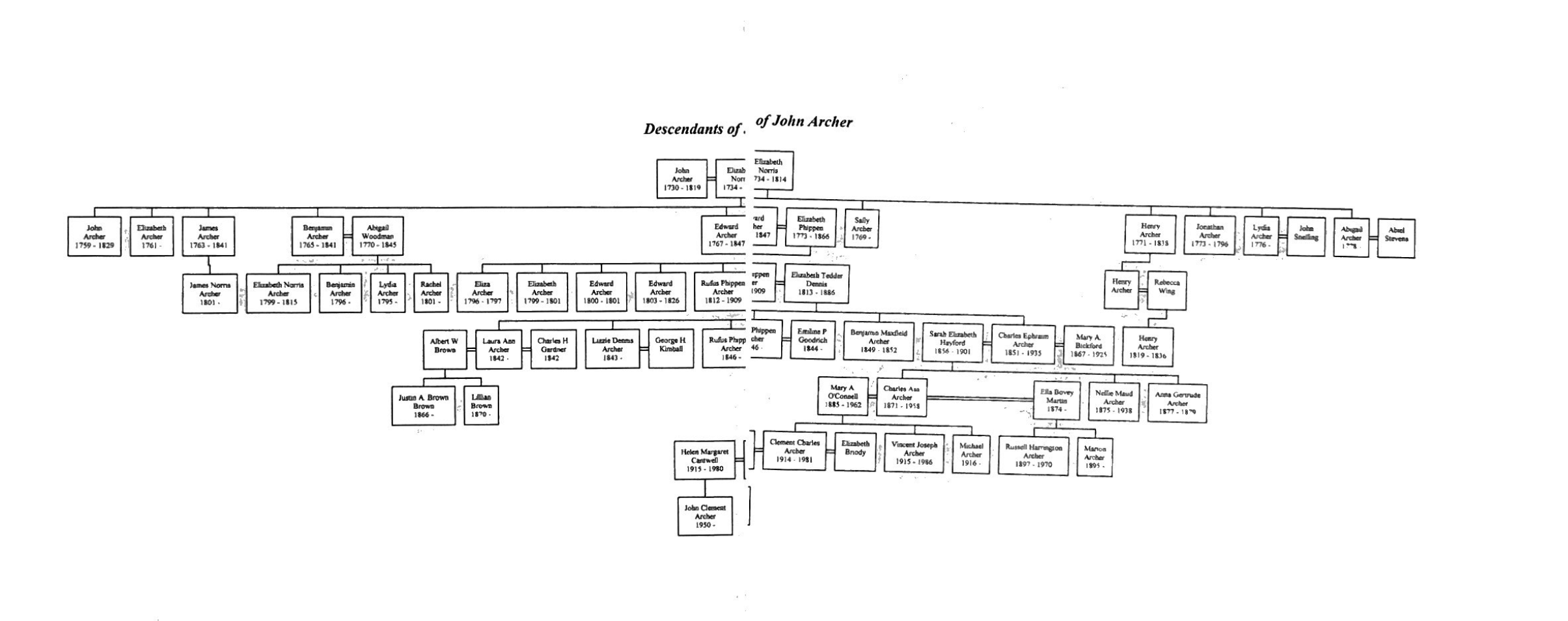
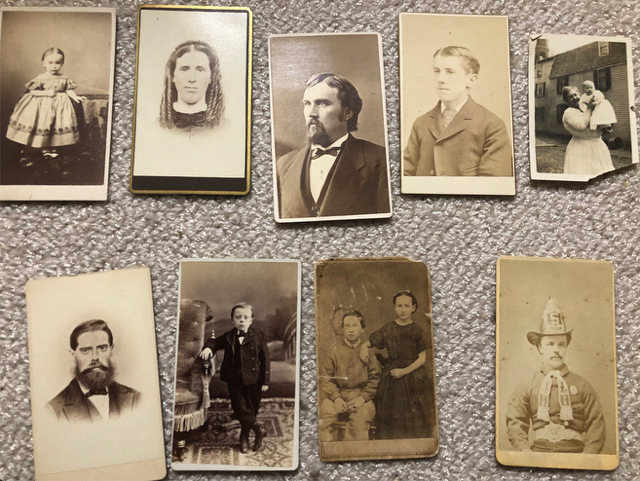
I called my dad. He had been deep in ancestry research for years and had a stack of materials I had never really looked at.
The cemetery
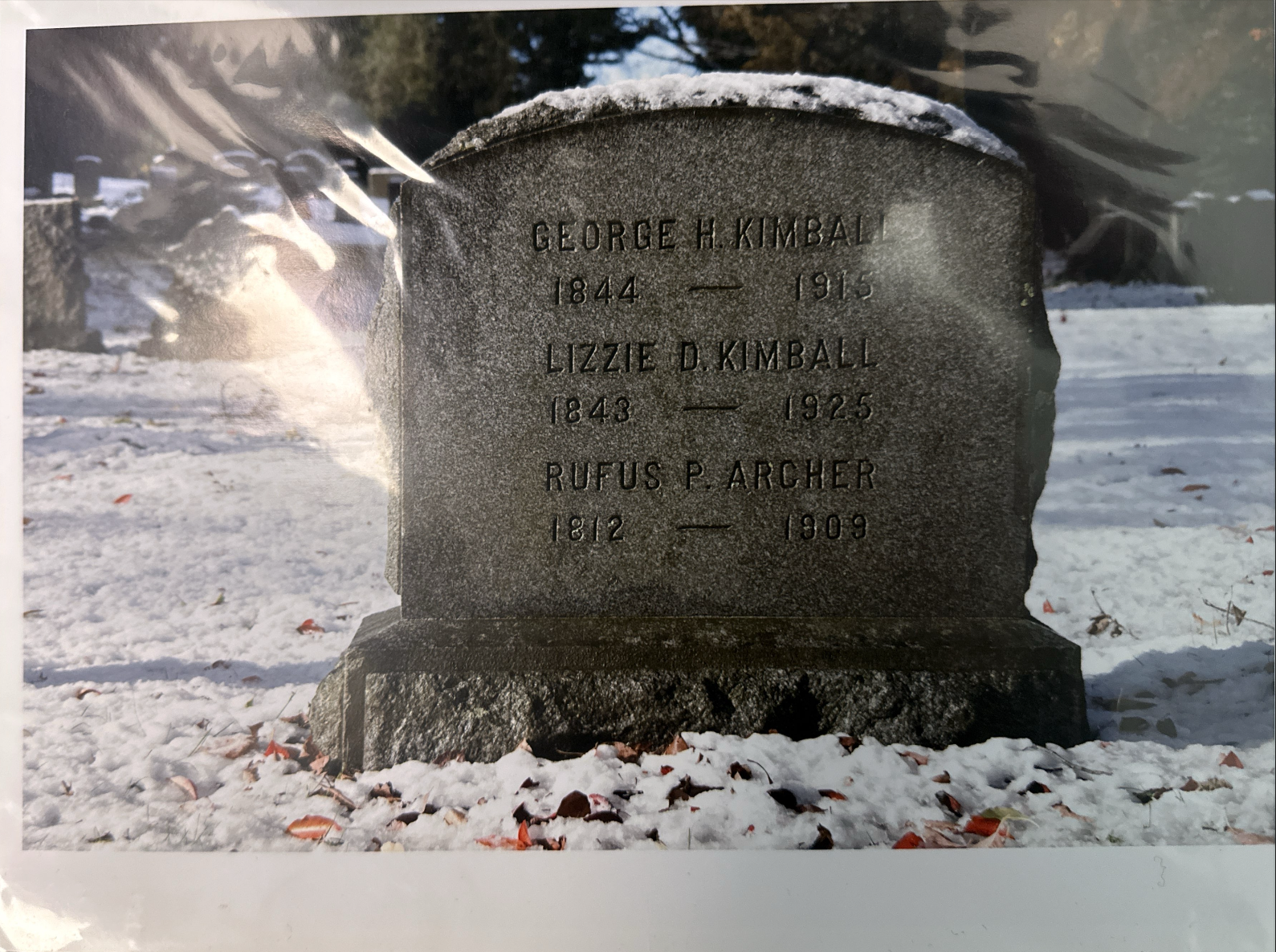
Dad had driven himself out to old cemeteries and photographed gravestones directly. Real archival fieldwork, no shortcut.
The one photo
One name jumped off the page. Rufus. Salem, turn of the century. Barrel maker. Volunteer firefighter. Four kids, same as me.
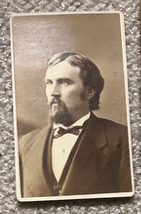
There was a single photograph of him. 141 by 214 pixels. Faded. You could barely make out the shape of his face.
The restoration
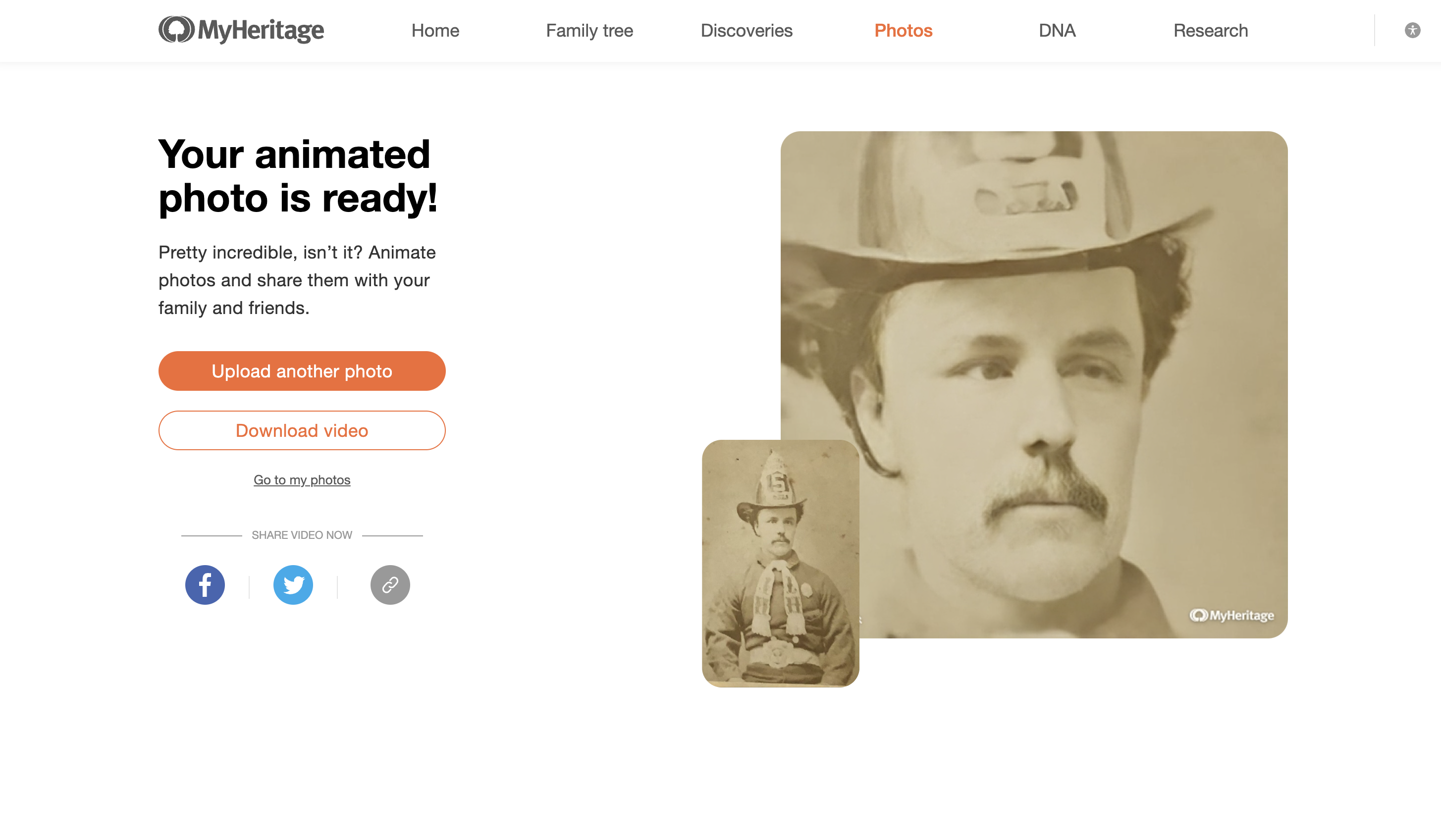
Step one was getting the source image into a state the models could actually read. I ran it through MyHeritage's photo restoration, which is purpose-built for old family photographs.
The face
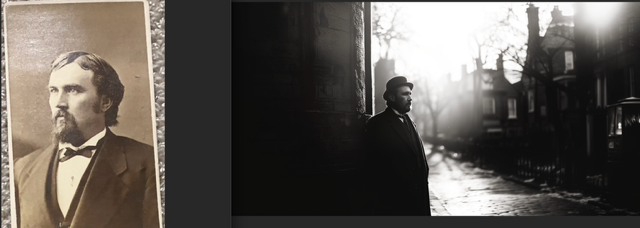
I fed the restored image into Midjourney. What came back was a cinematic black-and-white portrait. Top hat. Steam in the magic-hour light. A face I had never met but could now look at directly.
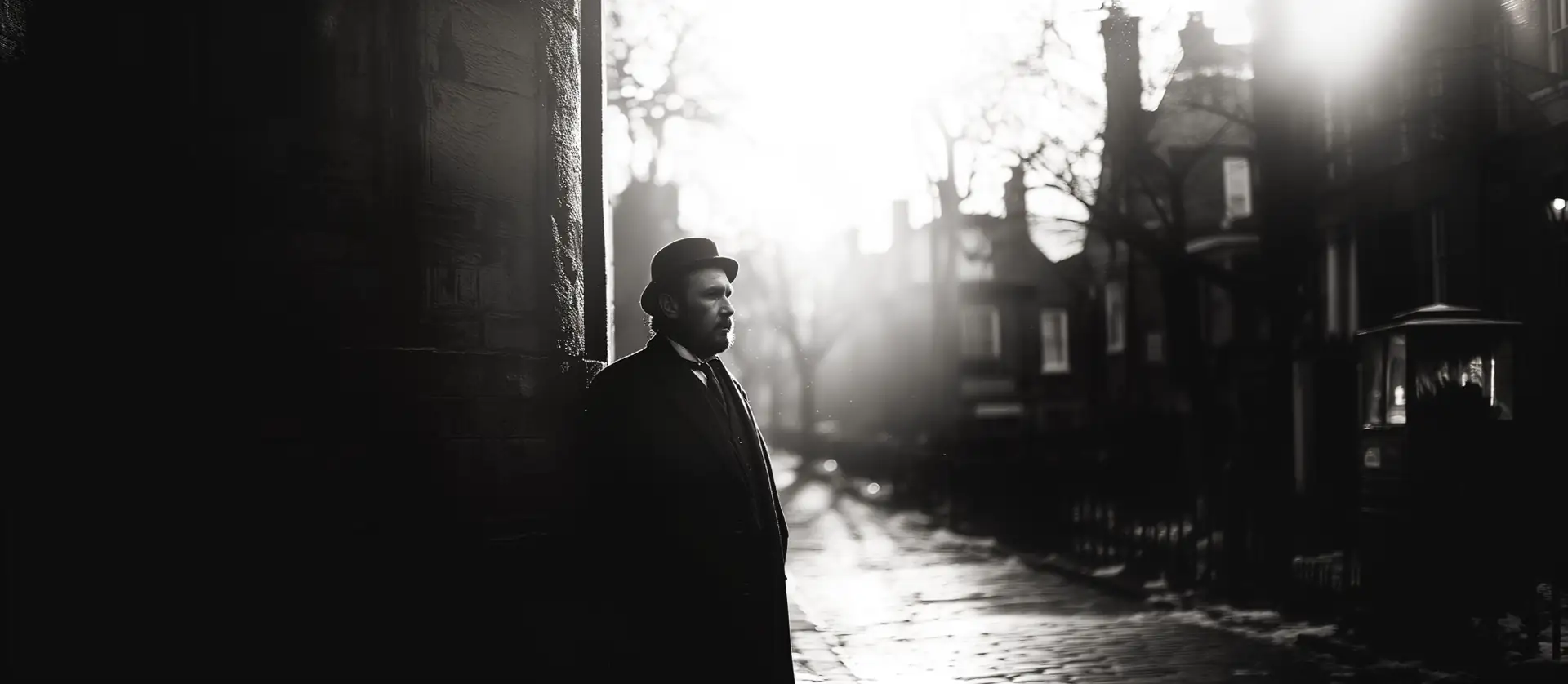
That was the moment. The instant I saw that portrait, I knew I could make a Ken Burns documentary entirely from AI-generated material. The format is mostly photographs and slow moves and good storytelling. I had been making that kind of work for twenty years. I just had new tools now.
Building Salem 1905
I needed the world. A cooper's shop. The firehouse. The streets at magic hour. The history is well documented but the imagery lives scattered across libraries and historical society archives.
I used Midjourney to assemble the world. Every image is generated, every image is anchored to a real reference. The barrels are how barrels were made. The streets are how those streets looked. Period clothing, period light, period grain.
The voice
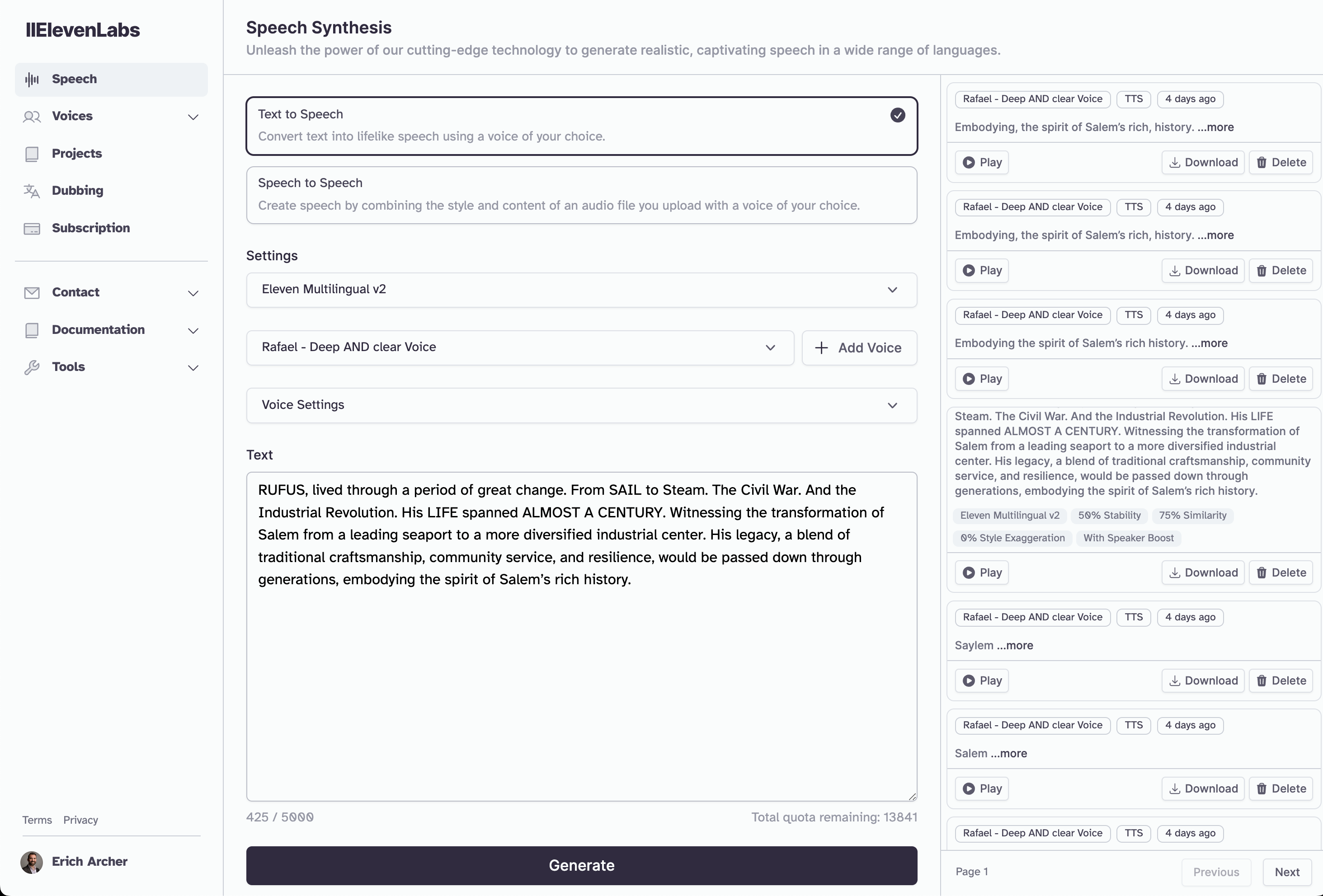
Narration came through ElevenLabs. I tested dozens of voice profiles, then settled on one with the warmth and roughness of a New England working man from a hundred years ago.
The motion
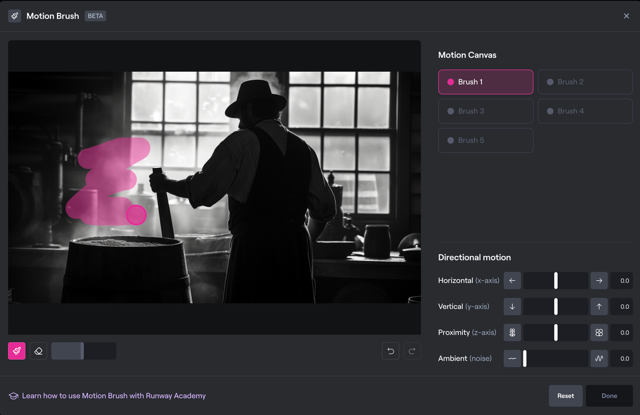
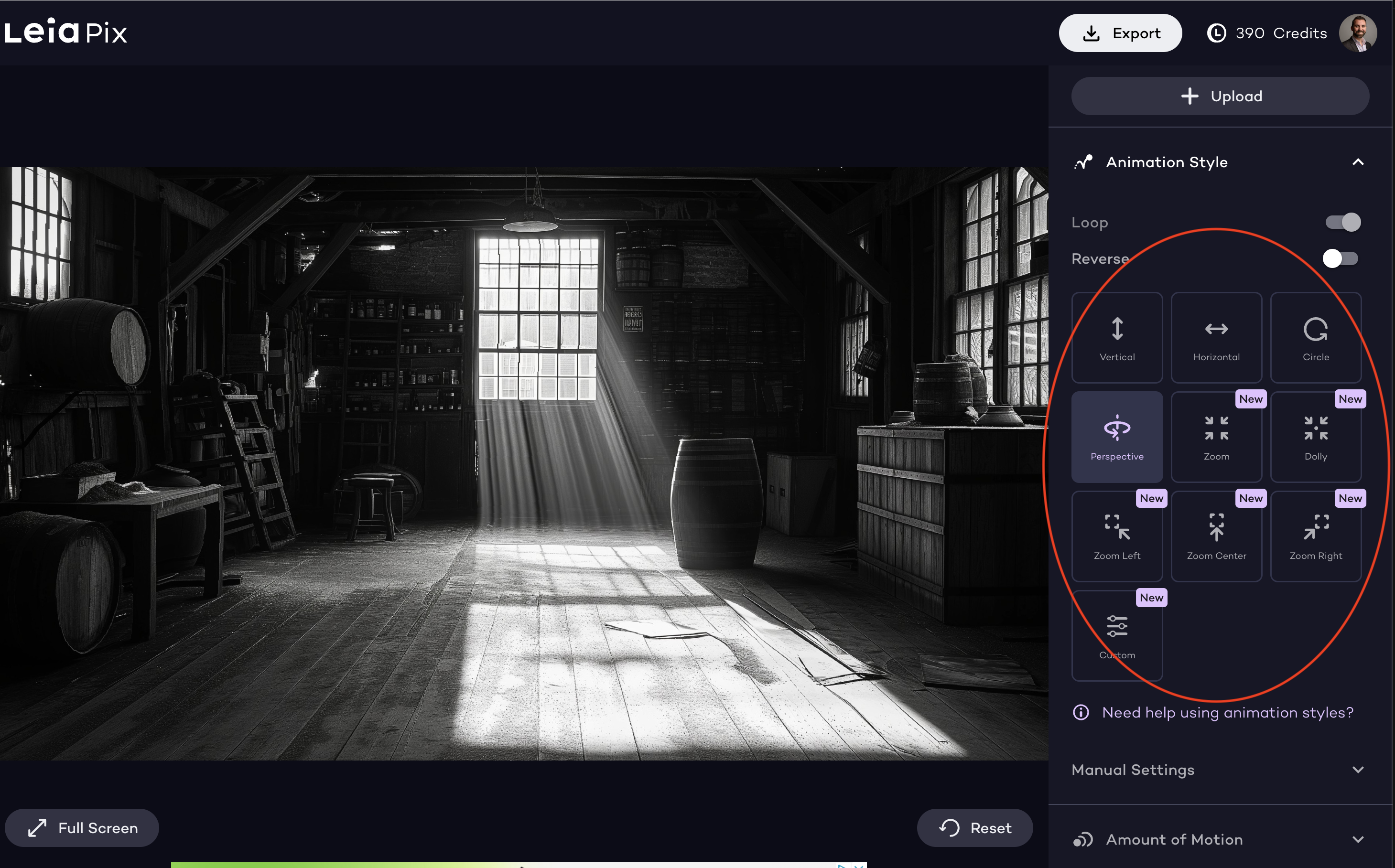
Still images become motion two ways. Runway for image-to-video with real movement. Leiapix for parallax and depth shifts on shots that just needed a slow push.
The interview
The piece of the project that nobody can see in the film is the part I am proudest of. I built a custom GPT trained on Rufus. The org chart, the gravestones, the historical research, everything Dad had collected. Then I sat down and interviewed him.
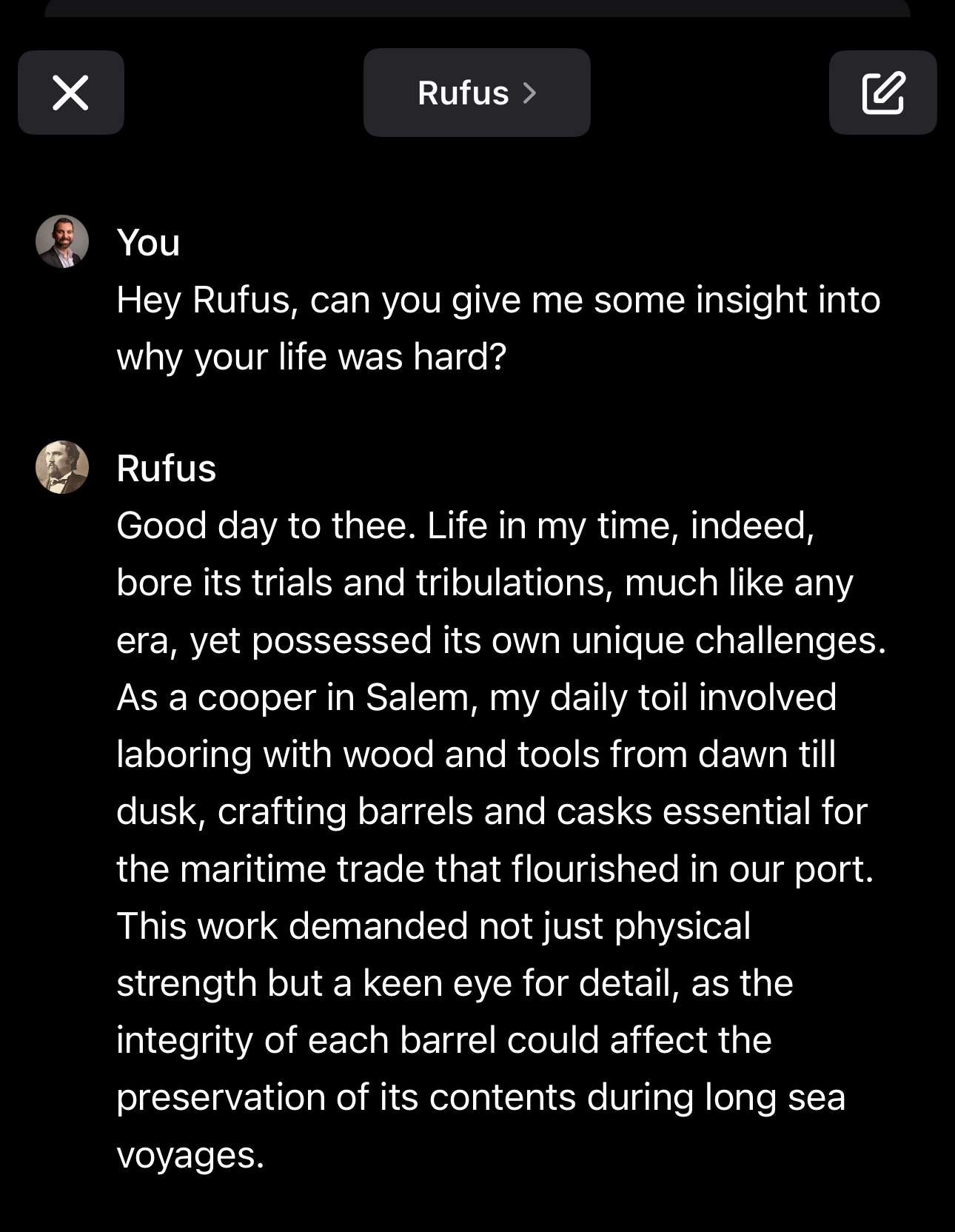
I asked about his sons. The fires he fought. Whether he was scared when the cooper trade started disappearing. None of it is canonical. All of it is consistent with the evidence. The interview shaped the narration and the emotional core of the film, but never appears in it directly.
The interview itself was for me.
Try RufusGPT yourself →The AI stack
Every stage used AI. Not bolted on. The whole pipeline.
What it opened
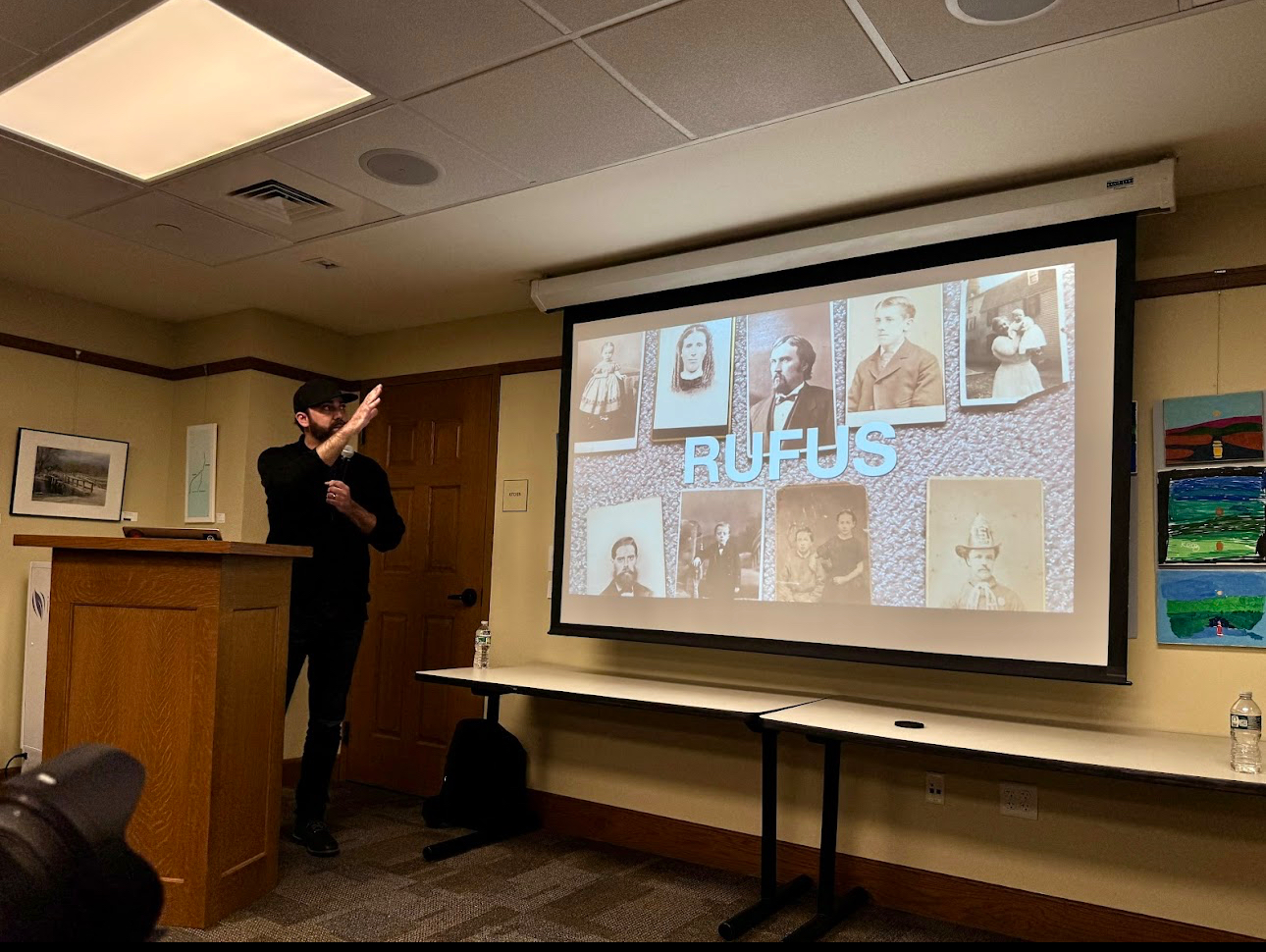
Rufus opened doors I did not expect. The MIT AI Film Festival invited me. Boston AI Week. Tech Week Boston. Northeastern. Harvard. People who had been watching generative output for two years saw the film and understood the difference between AI as a novelty and AI as a medium.
The film is also why CGA exists. The day I finished Rufus, I realized the production system I had built around it was the actual artifact. The film was the proof. The system was the product.
Want to make something like this for your work?
Original AI-native film. Branded short. Ancestry piece. Historical reconstruction. The system that made Rufus is the same system CGA brings to client work.
Start a conversation →