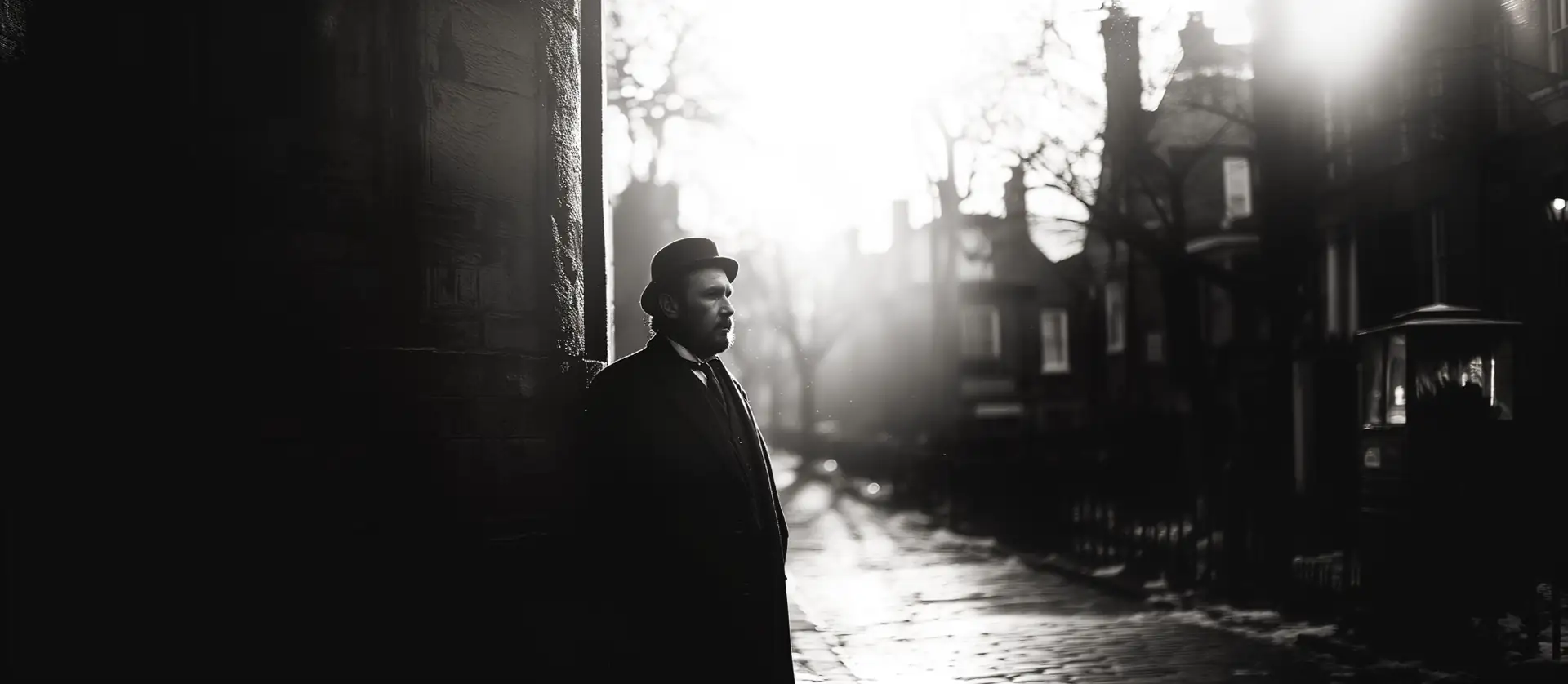
Rufus Archer
Cooper. Volunteer firefighter. Father of five. Lived 97 years through the War of 1812, the age of sail, the Civil War, and the Industrial Revolution. Two photographs survived. No motion picture footage. No voice recordings. No contemporaneous visual record of the world he moved through.
Rufus is the proof of concept. His documentary was built entirely from ancestry records and two surviving photographs using AI-native production methods. A complete, emotionally resonant, historically grounded film reconstructing a life the historical record nearly erased. The Historical Resurrection Project scales what Rufus proved.
AI brings the evidence to life. It does not replace it.
The Historical Resurrection Project uses AI to reconstruct ancestral stories and historical figures when traditional documentary materials do not exist. Every reconstruction is grounded in primary source material: census records, land deeds, newspapers, photographs, letters, diaries, and academic research.
AI reconstructs environment, context, and lived experience. It visualizes what the historical record describes. The story is established by evidence. AI makes it visible.
This is not experimental media. It is not a tech demo. It is cultural preservation infrastructure designed for institutional placement and long-term public stewardship.
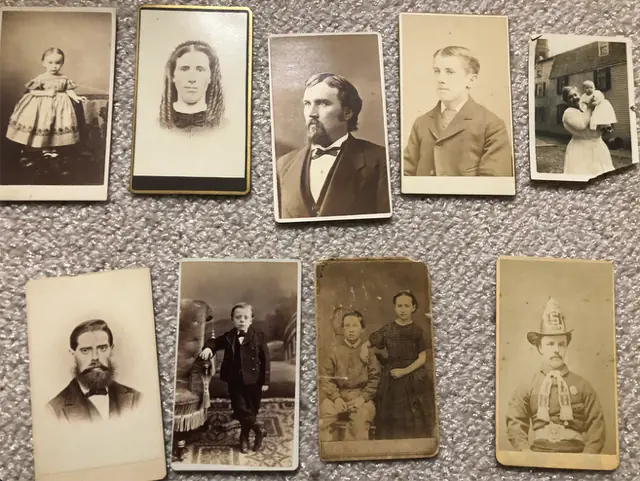
Three integrated components.
Ethical AI Documentary Framework
A documented methodology governing when and how AI reconstruction is used. Source validation thresholds, disclosure standards, visual restraint guidelines, and ethical review checkpoints at every production stage.
Modular Documentary Production
Short-form, self-contained documentary modules that stand alone or aggregate into regional collections, thematic series, or commemorative programs. Repeatable, scalable, institutional-grade.
Custodial Stewardship
Completed works are placed into long-term public custody with museums, historical societies, libraries, and academic institutions. Historical artifacts in the public archive, not content optimized for platforms.
Not every story should be told this way.
AI-assisted documentary reconstruction is used only when it is necessary, appropriate, and ethically justified. All three of the following conditions must be met.
1. Historical significance is real
The story matters beyond personal interest. It shaped a community, an industry, a civic institution, a labor movement, or a cultural tradition. The significance can be documented and articulated.
2. Archives exist but are incomplete
There is evidence: written records, oral histories, municipal documents, census data, photographs. But no motion picture footage or images sufficient to tell the story visually. The story is grounded in real documentation, not speculation.
3. AI is the most responsible option
If a story can be told using existing footage, it should be. AI belongs here only when conventional documentary methods fail and reconstruction restores understanding without distorting truth.
Target subjects
Overlooked individuals whose work shaped culture or civic life. Communities erased by policy or change. Places demolished before documentation. Family archives at risk. Labor and contribution historically under-recorded.
How it works.
Source Validation
Primary sources must include at least two forms of evidence: written records, census data, newspapers, oral histories, photographs, letters, or academic research. The story's core facts are established before any AI work begins.
Ethical Review
Pre-production review confirms the story meets selection criteria, source material meets validation thresholds, and AI is the right tool. A custodial partner institution is identified from the start.
AI Reconstruction
AI reconstructs environment, context, and lived experience grounded in documented evidence. Conservative visual treatment prioritizes historical accuracy over visual impact. No invented dialogue, no dramatic embellishment.
Transparent Disclosure
Every module includes clear opening disclosure, in-context markers distinguishing AI-generated content from archival material, closing methodology note, source bibliography, and ethical review summary.
Institutional Placement
Completed works are placed into permanent public custody with partner institutions. These become historical artifacts in the public archive. Long-term stewardship, scholarly validation, and contextual integrity are preserved.
Built for institutions, not platforms.
Finished HRP documentaries are not published on YouTube or social media. They are placed into permanent public custody with partner institutions that have the expertise and mission to steward them properly.
Each completed module includes full methodology documentation, source bibliography, ethical review records, and companion educational materials. The institution receives everything needed to contextualize, preserve, and present the work.
Museums
Historical societies, cultural heritage museums, and regional archives with permanent collection programs.
Libraries
Public and academic libraries with digital preservation infrastructure and community programming.
Universities
Academic institutions with history, ethnic studies, or digital humanities departments and archival capacity.
Ethical AI for Cultural Preservation
The framework that makes this work credible, fundable, and defensible. Four core principles govern every production.
Evidence-grounded
All reconstructions are grounded in primary source material. AI visualizes the context and environment described by the historical record. It does not invent facts.
Fully disclosed
AI-generated visuals and audio are explicitly disclosed and contextualized. Opening cards, in-context markers, and closing methodology notes make the process transparent.
Visually restrained
Conservative visual treatment prioritizes historical accuracy over cinematic spectacle. No invented dialogue, no reaction shots, no footage that implies a camera was present.
Institutionally custodied
Finished works are treated as cultural artifacts with provenance. They are placed into public stewardship, not personal distribution channels or content platforms.
For Institutional Partners
This is cultural preservation infrastructure. If your institution holds stories that deserve to be seen, or if you fund work that preserves cultural memory, this is built for you.
Start a Conversation