
Historical Resurrection Project
Ethical AI Documentaries for Cultural Preservation
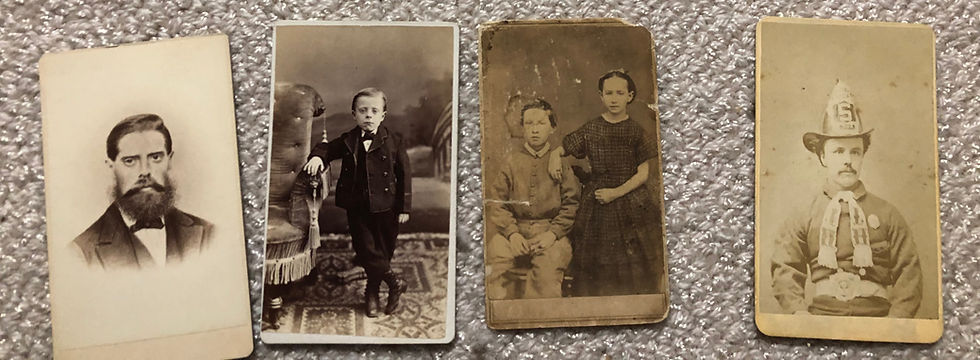
History does not disappear all at once.
It fades quietly when stories remain inaccessible, under-interpreted, or unseen.
So many lives have been lived beyond the camera. Communities shaped places without leaving footage behind. Labor, care, organizing, and creativity often went undocumented, not because they lacked importance, but because the tools and attention were never there.
The Historical Resurrection Project exists to intervene carefully, ethically, and publicly, so that stories without footage can still be understood, remembered, and held in trust.
Using archival research, documentary craft, and ethical AI-assisted reconstruction, we create documentary works when traditional footage does not exist.
This work is not entertainment. It is preservation through activation.

What We Do
We produce documentary works that bring overlooked historical stories into public view, using new creative technologies to recover moments that would otherwise remain unseen.
Each project centers a real, documented historical subject and is built from primary source material, including archival records and firsthand accounts.
When visual or audio records do not exist, artificial intelligence allows us to carefully reconstruct context, environments, and events that history never captured, expanding what documentary storytelling can responsibly show.
This technology is used with restraint and full disclosure, never as a substitute for evidence, and always in service of historical understanding. All work is governed by strict ethical standards and transparent authorship practices, and each finished project is placed into long-term public custody through trusted cultural and educational institutions.
The result is not simply a film, but a meaningful preservation of stories that would otherwise be lost to time.

Project Structure
Historical Resurrection Projects are designed as focused, self-contained works that can be commissioned individually or grouped into larger collections.
Many institutions begin with a single short-form documentary module centered on one place, system, or historical moment.
Additional modules may be added over time to form neighborhood collections, thematic series, or anniversary-based programs, depending on institutional goals and funding structures.
This modular approach allows institutions to preserve and steward historically significant stories with care, flexibility, and fiscal clarity.

When This Approach Is Used
Not every story should be told this way.
AI-assisted documentary is used only when it is necessary, appropriate, and ethically justified.
Each project must meet clear criteria:
-
The historical significance is real and explainable
-
Archival material exists but is incomplete, fragmented, or non-visual
-
AI reconstruction is the most responsible option available, not a stylistic choice
If a story can be clearly and responsibly told using existing footage, it should be. AI belongs here only when it restores understanding without distorting truth.

Why AI Matters Here
Some histories cannot be responsibly told using conventional documentary methods alone.
When imagery does not exist, filmmakers have historically relied on reenactment, generic stock footage, or omission, approaches that can obscure meaning or mislead audiences.
Ethical AI-assisted reconstruction offers a better alternative.
When used with restraint and transparency, AI allows documentary makers to visualize context, environment, and experience without inventing facts or implying documentation that never existed. It expands what documentary storytelling can responsibly show, especially for histories shaped outside centers of power, media, or preservation.
In this project, AI is not the story.
It is the technology that makes preservation possible when conventional methods fail.

What Makes This Possible
Under these constraints, AI-assisted documentary opens access to histories that have long been difficult or impossible to preserve responsibly, including:
-
Overlooked individuals whose work shaped culture, labor, or civic life
-
Communities and ways of life erased by policy, industry, or environmental change
-
Places transformed or demolished before they could be documented
-
Family and personal archives at risk of disappearance
-
Forms of labor, care, and contribution historically under-documented
-
Deeply regional and place-based histories tied to collective memory
These stories are not rare. They are foundational.

Stewardship Model
We do not distribute films. We place historical works into public custody.
Each project follows a custodial model, with a museum, historical society, library, or academic institution that agrees to steward the work long-term.
Additional institutions are authorized to exhibit, teach, or host the work under non-exclusive license.
Access is mediated through custodians to ensure contextual integrity, ethical framing, and durability over time.
This approach treats each project as a cultural artifact with provenance, not content optimized for platforms.

Ethical AI for Cultural Preservation
Preservation does not happen by accident.
It requires intention, care, and long-term responsibility.
The Historical Resurrection Project exists to ensure that historically significant stories are completed, ethically produced, and placed into public custody where they can endure.
